
July 24, 2026
Start a Dog Grooming Business
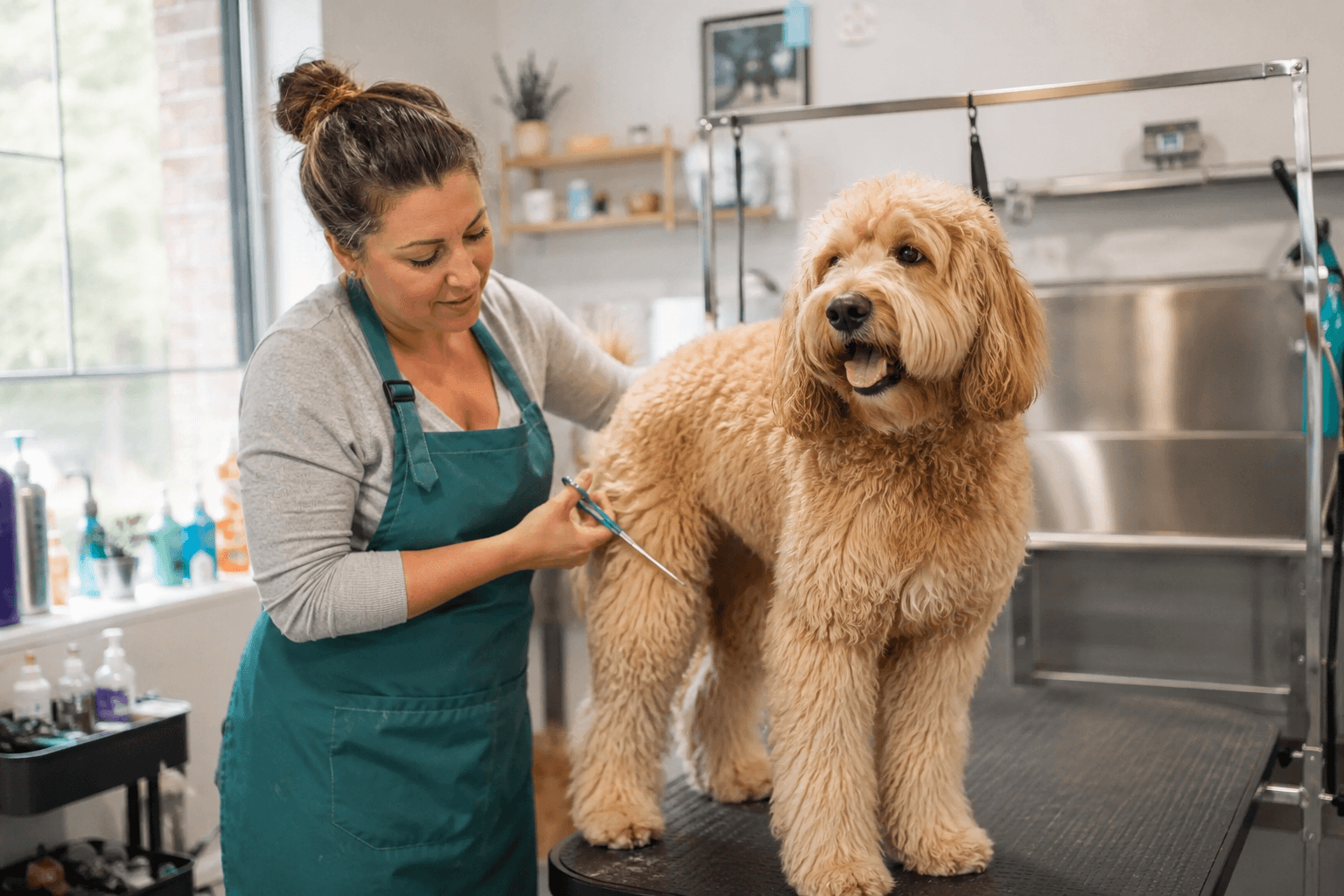
Dogs need haircuts no matter what the economy is doing — and that's exactly why so many groomers eventually ask themselves the same question: why am I building someone else's client list instead of my own?
If you're ready to start a dog grooming business, this guide walks you through every step, from choosing your business model to booking your first paying clients. Whether you're a certified groomer going independent or a pet lover planning a career change, here's what it actually takes.
Step 1: Choose Your Business Model
Before you buy a single pair of shears, decide where you'll groom. Your model shapes your startup costs, pricing, and daily workflow.
Home-based studio. Convert a garage or spare room. This is the lowest barrier to entry, typically costing $2,000–$15,000 to set up. Check your local zoning rules first — some cities restrict animal businesses in residential areas.
Mobile grooming. A fully outfitted van or trailer that travels to clients. Expect $20,000–$100,000+ depending on whether you buy used or build custom. Mobile groomers charge premium prices, and it's the fastest-growing segment of the industry because pet parents love the convenience.
Brick-and-mortar salon. A commercial storefront can support multiple groomers and higher volume, but plan for $50,000–$100,000+ once you factor in rent, plumbing, tubs, and HVAC built to handle moisture and hair.
Pick the model that matches your budget, your zoning, and how you want to spend your days — not the one that looks best on Instagram.
Step 2: Get Trained and Certified
Here's something that surprises most people: no U.S. state currently requires a license specifically to groom dogs. But "not required" doesn't mean "not important."
Voluntary certifications from organizations like the National Dog Groomers Association of America (NDGAA) or International Society of Canine Cosmetologists (ISCC) build trust with clients, help you command higher prices, and can lower your insurance premiums. If you're new to grooming, plan on formal training plus roughly a year of hands-on practice — many grooming schools offer apprenticeship placements to bridge that gap.
Step 3: Handle Licenses, Permits, and Insurance
Even without a grooming-specific license, you'll still need to make your business legal:
General business license from your city or county, typically $50–$400
Business entity registration — most groomers form an LLC for liability protection
EIN from the IRS (free, takes minutes online)
Animal services or kennel permit, required in some cities
Mobile vendor permit if you're going the van route, usually $100–$500
Then get liability insurance. You're handling squirmy animals with sharp tools — one nicked ear or slipped leash can turn into a claim. Most groomers also add coverage for animals in their care, custody, and control. Budget $500–$2,000+ per year depending on your setup.
Step 4: Budget Your Startup Costs
Here's a realistic breakdown of what you'll spend before your first appointment:
Grooming table, tub, and dryer: $2,000–$8,000
Clippers, shears, brushes, and tools: $500–$2,000 (brands like Andis and Wahl are industry standards)
Shampoos, conditioners, and consumables: $300–$500 to start
Licenses, permits, and insurance: $600–$2,500
Website, branding, and initial marketing: $500–$3,000
Grooming software: $0–$100/month
Buy consumables from wholesale pet suppliers rather than retail — the savings add up fast when you're washing ten dogs a week.
Step 5: Set Your Prices and Services
Research what groomers in your area charge for a full groom, bath and brush, nail trims, and de-shedding treatments. In most markets, a standard groom runs $45–$75+, with mobile groomers charging 20–40% more for the convenience.
A few pricing tips that protect your margins:
Price by breed and coat condition, not just size. A matted Doodle takes twice as long as a short-haired Lab.
Charge for de-matting. It's skilled, time-consuming work — don't give it away.
Add-ons are profit. Teeth brushing, nail grinding, and specialty shampoos boost your average ticket with minimal extra time.
Know your monthly break-even number (rent, insurance, supplies, loan payments) so you can work backward to how many dogs you need per week.
Step 6: Set Up Your Booking and Client System
This is where many new groomers stumble. Running your schedule through text threads and a paper calendar works for your first ten clients — then it falls apart. Double-bookings, forgotten vaccine records, and no-shows quietly eat your income.
Set up grooming software from day one. Look for a platform that handles online booking, automated appointment reminders, client and pet profiles (coat notes, temperament, vaccine expirations), and payment processing. Automated reminders alone can cut no-shows dramatically — and every empty slot you prevent is $50–$75 back in your pocket.
Furbello was built specifically for independent groomers and small salons, so you can manage bookings, reminders, and pet records without enterprise-level pricing.
Step 7: Market Your Grooming Business
You don't need a huge ad budget — you need to show up where local pet parents are already looking.
Claim your Google Business Profile. Most grooming searches are local ("dog groomer near me"), and your profile is what puts you on the map. Fill out every field, add real photos of your work, and keep your hours current.
Ask every happy client for a review. Reviews drive local rankings and trust more than anything else you can do. A steady trickle of new Google reviews beats a one-time push.
Post before-and-after photos. Grooming is a visual business. Instagram and Facebook transformations are your best portfolio, and local Facebook groups are full of owners asking for groomer recommendations.
Partner locally. Vets, pet stores, trainers, and dog walkers all get asked "do you know a good groomer?" Introduce yourself and leave cards.
Launch a referral and loyalty program. A discount for referrals or a free nail trim after five visits keeps clients coming back on a regular schedule — and rebooking clients every 4–6 weeks is what makes your revenue predictable.
Step 8: Avoid the Mistakes That Sink New Groomers
Learn from the groomers who didn't make it past year two:
Saying yes to every dog. Aggressive dogs and severely matted coats beyond your skill level lead to injuries and bad reviews. It's okay to refer out.
Underpricing to win clients. Cheap clients are the first to leave and the most demanding while they stay. Compete on quality and convenience, not price.
Relying only on referrals. Word of mouth is powerful but slow. Actively market for your first 12–18 months.
Ignoring the physical toll. Grooming means hours on your feet lifting dogs of every size. Invest in a hydraulic table and pace your schedule.
How Much Can a Dog Grooming Business Make?
A solo groomer handling 6–8 dogs a day at $60 average can gross $90,000–$120,000 a year before expenses. Mobile groomers often earn more per appointment, while salon owners scale by adding groomers. Americans spend over $130 billion a year on their pets, and grooming keeps growing — this is a business with real demand behind it.
Ready to Start Your Dog Grooming Business?
Starting a dog grooming business comes down to a clear sequence: pick your model, get trained, make it legal, buy smart, price for profit, and market locally. The groomers who thrive treat it like a business from day one — organized bookings, consistent rebooking, and a client experience that earns five-star reviews.
When you're ready to get your bookings, reminders, and pet records off paper and into one place, [try Furbello free] and spend your time grooming, not chasing appointments.
FAQ
Do I need a license to start a dog grooming business? No U.S. state requires a grooming-specific license, but you'll need a general business license ($50–$400), and some cities require animal services permits. Voluntary certification is strongly recommended.
How much does it cost to start a dog grooming business? From about $2,000–$15,000 for a home-based studio, $20,000–$100,000+ for a mobile van, and $50,000–$100,000+ for a full salon.
Is dog grooming profitable? Yes — a full-time solo groomer can gross $90,000+ per year, with mobile groomers commanding premium rates for convenience.
How do I get my first grooming clients? Claim your Google Business Profile, ask for reviews, post before-and-after photos on social media, and partner with local vets and pet stores for referrals.