
August 21, 2026
How to Start a Mobile Dog Grooming Business
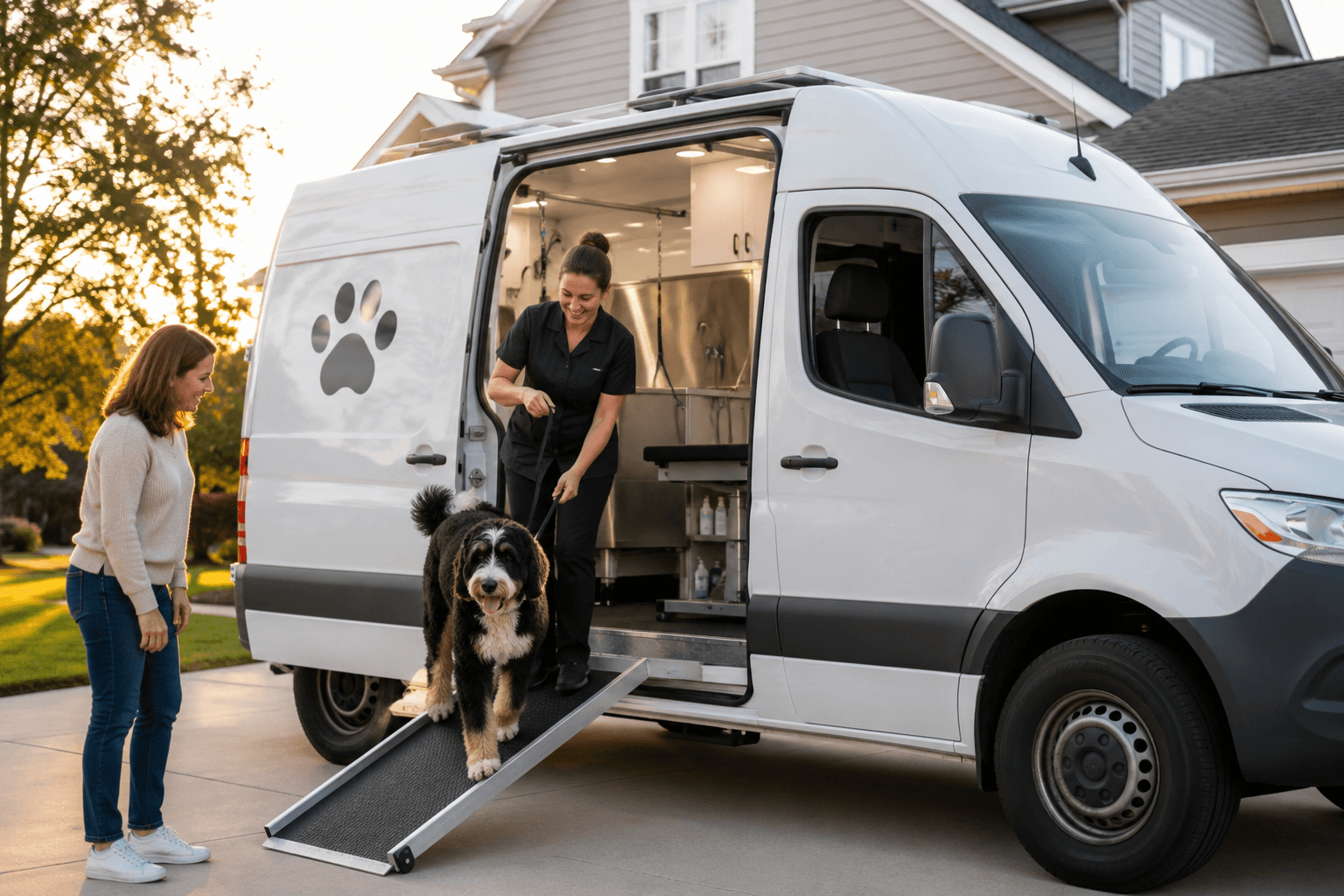
Mobile grooming is the fastest-growing corner of the pet care industry, and it's not hard to see why. Pet parents get salon-quality grooming in their driveway with zero car anxiety for the dog, and groomers get premium pricing, no landlord, and a one-on-one workflow with no kennel stress.
But a mobile grooming business is really two businesses in one: a grooming operation and a vehicle operation. This guide covers the parts that are unique to going mobile — the van, the buildout, the permits, the pricing, and the route math that decides whether you profit. (For the fundamentals that apply to every grooming business — training, business structure, insurance basics — start with our complete guide to starting a dog grooming business.)
Why Mobile Grooming Wins Clients
Understanding your advantages helps you price and market them:
Convenience. No drop-off, no pickup, no dog crying in the car. Busy professionals and multi-dog households pay real money for this.
Less stress for the dog. One-on-one attention, no cage drying, no barking chaos. This is a genuine selling point for anxious, senior, and reactive dogs — an underserved, loyal niche.
Faster turnaround. The dog is done in 60–90 minutes instead of spending half a day at a salon.
Premium pricing. All of the above justifies charging 20–40% more than shop-based groomers in your area.
What a Mobile Grooming Business Costs to Start
Plan for a total startup investment of roughly $45,000–$100,000 for a professional setup. Here's where it goes:
The vehicle: $15,000–$65,000. Your biggest decision and expense. Used converted vans start around $15,000–$30,000; new custom-built grooming vans and trailers run $50,000–$65,000+. A trailer pulled by a truck you already own can shave costs, but limits where you can park and maneuver.
Conversion and buildout: $5,000–$15,000 if you're outfitting a bare van — plumbing, water tanks, electrical, generator or battery system, tub, table, and climate control. Heat and A/C aren't luxuries; they're animal-safety requirements.
Equipment and tools: $5,000–$15,000. Professional dryer, clippers, shears, and a hydraulic or electric table sized for the van.
Insurance: $2,000–$5,000/year. You need commercial auto insurance on top of general liability and animal bailee coverage — a personal auto policy will not cover a business vehicle.
Licenses and permits: $500–$2,500. Covered in detail below.
Marketing and branding: $1,000–$5,000 for a vehicle wrap, website, and launch advertising. The wrap is worth every penny — your van is a rolling billboard parked in a different neighborhood every hour.
Working capital: 3–6 months of expenses. Loan payments on the van don't wait for your client base to fill in.
The buy-used-vs-build-custom question comes down to cash flow: a $25,000 used van you can pay off quickly often beats a $65,000 showpiece with a payment that eats your first two years of profit. Inspect used grooming vans carefully — water damage and tired generators are the expensive surprises.
Licenses and Permits for Mobile Groomers
Mobile adds a layer on top of standard business licensing:
General business license from your city or county ($50–$400)
Mobile vendor permit ($100–$500) — required in many jurisdictions to operate a business from a vehicle, and you may need one for each city you serve
Animal services or kennel permit where required
Water discharge compliance. Many municipalities regulate graywater disposal — most modern grooming vans use recovery tanks you empty at approved locations. Know your local rules before your first bath.
Commercial vehicle registration, depending on your state and vehicle weight
Rules vary block by block, so call the city clerk for every municipality in your planned service area. Finding out about a permit from a code-enforcement officer mid-groom is not the way.
Pricing a Mobile Grooming Service
Take the going shop rates in your area and add your convenience premium. If local salons charge $60 for a small-breed full groom, your mobile price is $80–$95. Typical mobile full-groom ranges run $85–$130+, with metro areas higher.
Two mobile-specific pricing rules:
Set a service-call minimum. Driving 20 minutes for a $25 nail trim loses money. Either set a minimum visit charge ($75+) or only offer small services as add-ons to full grooms.
Charge for distance. Define your core service radius (often 15–20 miles), and add a travel fee beyond it — or simply decline. Your costs per appointment include $8–$12 in fuel, van wear, and supplies before you touch a dog.
Route Density: The Metric That Decides Your Income
Here's the thing that separates profitable mobile groomers from exhausted ones: you don't get paid to drive.
A groomer doing 6 dogs a day with clients scattered across the metro spends 2+ hours driving. The same groomer with clients clustered by neighborhood spends 45 minutes — and fits in an extra dog or two. At $95 per groom, that's $500+ a week of difference from scheduling alone.
How to build density:
Assign neighborhoods to days. Mondays are the east side, Tuesdays the lake neighborhoods, and so on. Clients adapt to your schedule faster than you'd expect.
Rebook on-cycle and on-route. Before you pull away, book the next appointment 4–6 weeks out on that neighborhood's day.
Market street by street. When you're parked at a client's house, that wrapped van is advertising to every neighbor. Door hangers on the surrounding homes ("We were just next door!") convert unusually well because the proof is sitting in the driveway.
Use scheduling software that shows your day on a map. Managing route-based scheduling by text thread is how double-bookings and 40-minute backtracks happen. This is exactly the workflow Furbello's booking and reminder system is built around — clients book into the slots you've opened for their area, and automated reminders protect appointments where a no-show costs you both the groom and the drive.
Equipment Notes Specific to Mobile
A few things shop groomers never think about:
Water capacity dictates your day. Know how many baths your tank supports and plan refill stops.
Power management. Dryers are power-hungry; whether you run a generator, shore power cords, or a battery bank, test your full-day load before booking a full day.
Weight matters. Water, equipment, and buildout add up fast — stay within your vehicle's rated capacity for safety and insurance validity.
Everything must be secured. Shears in drawers with latches, products in racks. Your salon takes corners.
Marketing Your Mobile Grooming Launch
Your first 90 days should focus on three channels:
Google Business Profile as a "service-area business." Set your coverage area, and gather reviews aggressively — mobile groomers live and die by "mobile dog grooming near me."
Neighborhood platforms. Nextdoor and local Facebook groups are where "can anyone recommend a mobile groomer?" gets asked weekly. Be present before you're needed.
The van itself. Park visibly, wrap it well, and treat every appointment as a marketing event for the surrounding houses.
Price for profit from day one — the earning potential is real (see our breakdown of how much dog groomers make, where mobile groomers consistently top the solo-groomer income range), but only if your pricing covers the van payment, fuel, and drive time that shop groomers don't have.
Ready to Roll?
Start a mobile dog grooming business in this order: secure your training and certifications, run the numbers on used vs. custom vans, get every permit for every city you'll serve, insure the vehicle commercially, price with a premium and a service minimum, and build your schedule around route density from client number one.
Get the operational side right before launch day — try Furbello free and have online booking, automated reminders, and client records ready before the wrap goes on the van.
FAQ
How much does it cost to start a mobile dog grooming business? Plan on $45,000–$100,000 all-in: $15,000–$65,000 for the van, $5,000–$15,000 each for buildout and equipment, plus insurance, permits, marketing, and working capital.
Is mobile dog grooming profitable? Yes — mobile groomers charge 20–40% more per appointment than salons, and efficient route planning lets experienced mobile groomers out-earn most shop-based peers.
What permits do I need for mobile dog grooming? Typically a general business license, a mobile vendor permit (sometimes per city), commercial auto insurance, and compliance with local graywater disposal rules. Requirements vary by municipality.
How much should a mobile groomer charge? Local shop rate plus 20–40%. Most mobile full grooms run $85–$130+, with a service-call minimum of around $75 to keep short visits profitable.