
July 13, 2026
How to Start a Dog Grooming Business in 2026: The Step-by-Step Guide
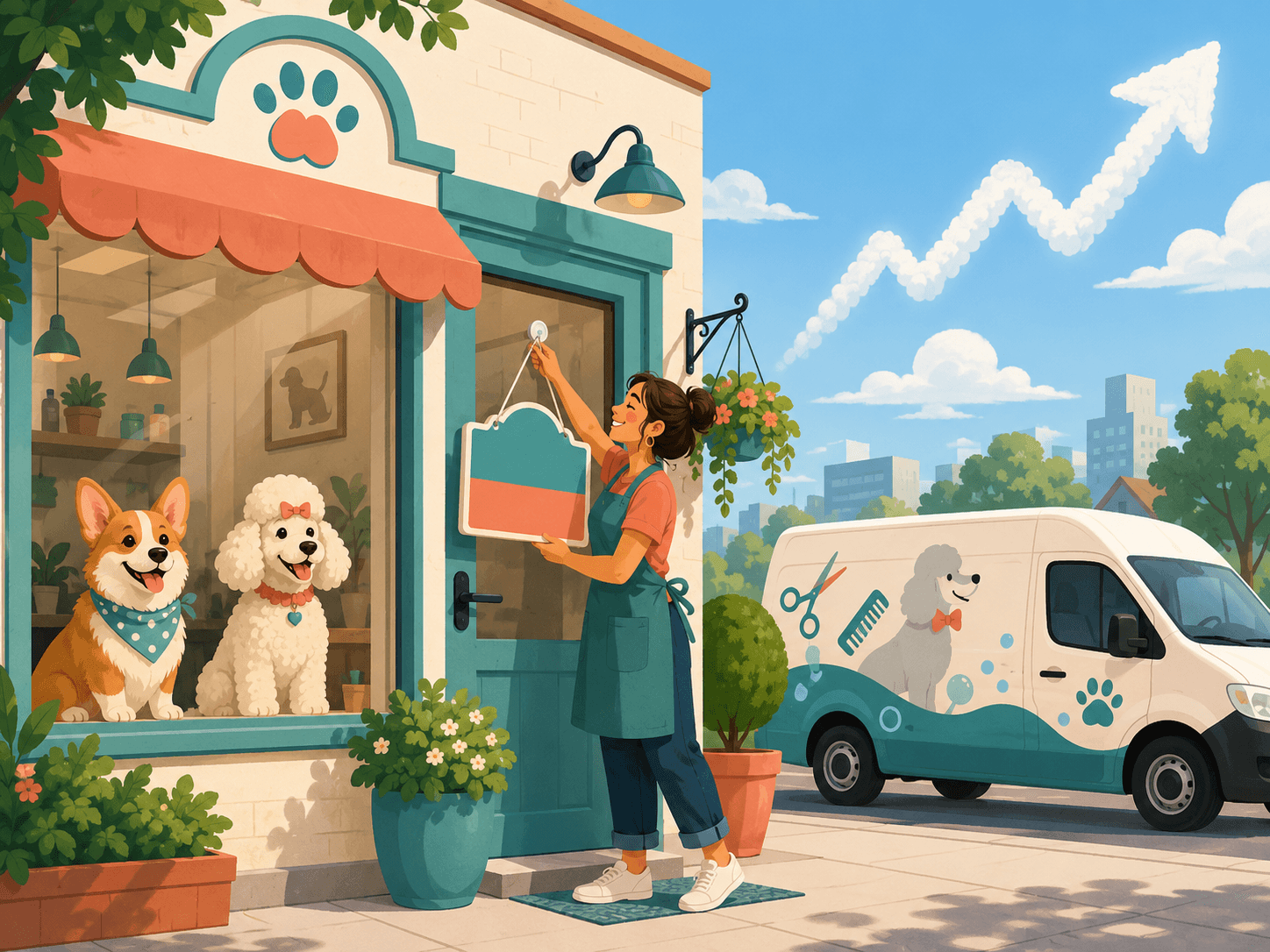
Starting a dog grooming business is one of the most achievable paths into pet-industry entrepreneurship. The barrier to entry is low, demand keeps growing, and you can launch as a home-based groomer, a mobile van, or a full salon.
But grooming skill alone doesn't build a business. The groomers who succeed pair their craft with systems — pricing, scheduling, marketing, and client management. This guide walks you through every step.
Step 1: Choose Your Business Model
Your model shapes everything else — startup costs, pricing, and daily operations.
Home-based grooming. Lowest startup cost. Great for building a client base, but check local zoning rules first.
Mobile grooming. A converted van brings the salon to the client. Higher startup cost ($30,000–$100,000+ for a rig), but premium pricing and huge demand.
Brick-and-mortar salon. Highest cost and highest ceiling. Expect $10,000–$50,000+ to open, depending on location and buildout.
Salon suite / booth rental. Rent a chair inside an existing pet business — a middle path with lower risk.
Step 2: Handle the Legal Basics
Dog grooming is lightly regulated in most U.S. states, but you still need to run a legitimate business:
Register your business — most solo groomers start as an LLC for liability protection.
Get a general business license if your city or county requires one.
Buy grooming business insurance — general liability plus animal bailee coverage is the industry standard.
Check local rules — salons face occupancy and sanitation codes; mobile groomers deal with parking and gray-water disposal regulations.
Prepare client paperwork — service agreements, matted-coat consent forms, vet authorization forms, and photo permissions.
Step 3: Get Trained and Certified
No state requires a grooming license to operate — but your reputation requires skill. Options include:
Apprenticing at an established salon (paid, hands-on, the most common path)
Grooming academies with structured programs
Certification through organizations like NDGAA or IPG — not mandatory, but a real trust signal on your website and Google profile
Step 4: Budget Your Startup Costs
A realistic starter budget for a small salon or home setup:
Grooming table, tub, and dryer: $2,000–$6,000
Clippers, blades, shears, brushes: $1,000–$2,500
Shampoos, conditioners, consumables: $300–$600
Insurance: $500–$1,500/year
Website and branding: $500–$2,000
Grooming software: $19–$100/month — the system that runs your bookings, reminders, and payments from day one
Mobile groomers should add the van conversion, and salon owners should add rent, deposits, and buildout.
Step 5: Set Your Prices for Profit
Underpricing is the #1 mistake new groomers make. Research every groomer within a 10-mile radius, note their services and reviews, and position yourself deliberately. As a starting framework:
Small dogs / short coats: entry-level pricing
Large breeds, doodles, and heavy coats: priced by time and coat condition, not flat rates
Add-ons (teeth brushing, de-shedding, nail grinding) to lift your average ticket
Matting and behavior surcharges clearly stated up front
We break down exact numbers in our full dog grooming pricing guide — but the rule is simple: price for the time a groom actually takes, and raise prices as your books fill.
Step 6: Set Up Your Booking and Client System Before You Open
This is the step new groomers skip — and regret. From your very first client, you need:
Online booking so clients can schedule without calling
Automated appointment reminders to prevent no-shows from day one
Pet profiles that store coat notes, vaccine records, and photos
Deposits or card-on-file to protect your calendar
Payment processing at checkout
Trying to run this from a paper book and personal texts caps your growth immediately. Purpose-built grooming software like Furbello handles all of it from your first appointment — and starting on software is far easier than migrating a messy client list later.
Step 7: Market Your Grooming Business
You don't need a big budget — you need consistency:
Claim your Google Business Profile. This is non-negotiable for local search. Get your first five 5-star reviews within a month.
Post before-and-after photos on Instagram and Facebook — grooming is a visual business, and transformations sell themselves.
Partner locally. Vets, pet stores, daycares, and trainers all meet your ideal clients daily. Offer a referral incentive.
Make rebooking automatic. The cheapest client to acquire is the one already on your table — book the next appointment at checkout, every time.
Use a simple website with your services, prices, photos, and a booking button above the fold.
Step 8: Deliver an Experience That Fills Your Calendar
The grooming businesses that hit capacity fastest share the same habits:
Communicate proactively — ready-for-pickup texts, running-late messages, post-groom report cards
Keep detailed notes so every groom is consistent, even months apart
Handle problems generously — one well-handled complaint creates a loyal client
Ask for reviews at the happiest moment: pickup
How Much Can a Dog Grooming Business Make?
Solo groomers commonly earn $40,000–$75,000+ per year once established, while busy mobile groomers and salon owners with staff can go well beyond that. Your ceiling depends on three levers: your prices, your rebooking rate, and how many appointments your systems let you handle without burning out.
FAQs About Starting a Dog Grooming Business
Do I need a license to start a dog grooming business?
No U.S. state requires a specific grooming license, but you'll typically need a general business license, registration, and insurance. Always verify local requirements.
How much does it cost to start a dog grooming business?
Home-based setups can launch for under $5,000. Salons typically run $10,000–$50,000+, and mobile grooming vans $30,000–$100,000+.
Is dog grooming a profitable business?
Yes — grooming has recurring demand built in. Dogs need grooming every 4–8 weeks, so a full book of rebooking clients creates predictable, repeating revenue.
Start Smart, Grow Fast
Every successful grooming business runs on the same foundation: great grooming, fair pricing, and systems that keep the calendar full. Set up your booking, reminders, and client records properly from day one, and you'll spend your energy where it belongs — on the dogs.
Start your grooming business on Furbello — free trial, no contracts, ready before your first client walks in.